
Trading around earnings announcements with options
Summary
Earnings season. It’s like the Super Bowl for traders. The anticipation, the suspense, and then—bam—a stock either moons or tanks in seconds. Honestly, if you’ve ever watched a stock move 10% in after-hours trading on a single report, you know […]
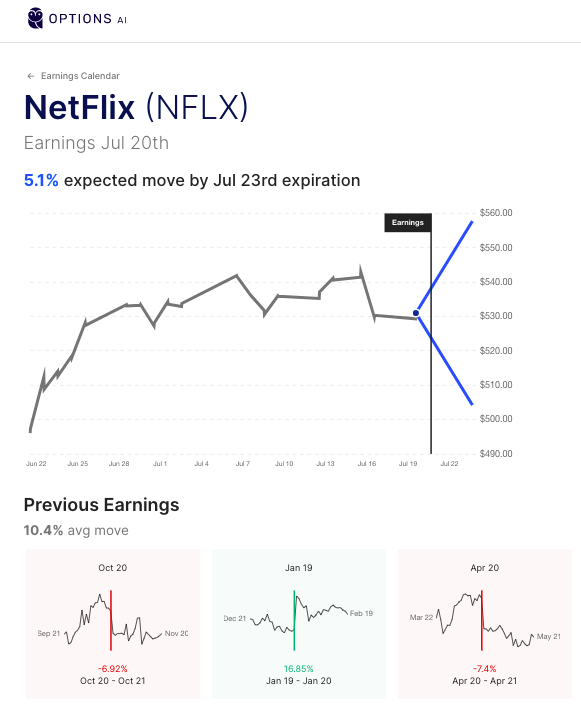
Earnings season. It’s like the Super Bowl for traders. The anticipation, the suspense, and then—bam—a stock either moons or tanks in seconds. Honestly, if you’ve ever watched a stock move 10% in after-hours trading on a single report, you know the rush. But here’s the thing: raw stock trading around earnings is a bit like bringing a knife to a gunfight. Options? That’s where the real strategy lives.
Let’s be real for a second. Trading options around earnings isn’t just about picking a direction. It’s about managing volatility, time decay, and that weird little monster called “implied volatility crush.” You know, the thing that can make a correct directional bet still lose money? Yeah, that.
Why options and earnings are a natural (but messy) match
Think of earnings announcements as a pressure cooker. Before the release, uncertainty is high. Traders bid up option premiums because they expect a big move. That’s implied volatility (IV) rising. After the announcement, the uncertainty vanishes—poof—and IV collapses. This is the “volatility crush.”
So, if you buy a plain call or put right before earnings, you’re paying a premium that’s inflated. Even if the stock moves in your favor, the crush can eat your profits. It’s like buying a ticket to a concert that’s already sold out—you overpay, and the show might not even be that good.
But here’s the kicker: options also give you asymmetric risk. You can define your max loss, which is a godsend when a company drops a 50% earnings miss. You can also use strategies that profit from the volatility crush itself. Yeah, that’s a thing.
The two camps: Directional vs. Volatility plays
There are basically two ways to approach this. First, you’ve got the directional trader—someone who thinks they know if the company will beat or miss. They might buy a straddle or a strangle. Second, you’ve got the volatility seller—the person who thinks the market’s fear is overblown. They sell options to collect premium, betting the move won’t be as big as priced in.
Neither is “right.” Both can work. But you need to know which camp you’re in before you click “buy.”
Key strategies for earnings options trading
Alright, let’s break down some specific plays. I’ll keep it practical—no theoretical nonsense that doesn’t work in real markets.
1. The Straddle (buying both sides)
This is the classic “I have no idea which way it’ll move, but it’ll move big.” You buy an at-the-money call and an at-the-money put with the same expiration. You’re betting on volatility, not direction.
Pros: You profit if the stock moves enough in either direction. Cons: You’re fighting time decay and the volatility crush. You need a massive move—often 8-12%—just to break even. For most stocks, that’s a tall order.
Honestly? I’ve seen new traders blow up on this. They see a 5% move and think they’re rich, but the options lose value because IV collapsed. It’s brutal.
2. The Iron Condor (selling volatility)
This is the opposite play. You sell a call spread and a put spread, creating a range where you think the stock will stay. You collect premium upfront. If the stock stays within that range, you keep the whole credit.
Pros: High probability of profit (often 70-80%). You profit from the volatility crush. Cons: Your max loss is capped, but it can be large if the stock gaps outside your range. And earnings can cause massive gaps—so choose your strikes carefully.
I like this for blue chips like Apple or Microsoft. They tend to have smaller post-earnings moves. But for a biotech stock? Forget it—too risky.
3. The Broken-Wing Butterfly (a sneaky play)
This is a bit more advanced, but it’s a favorite of mine. You buy a call butterfly but with one wing “broken” (different width). It reduces cost and gives you a bias. For example, if you think a stock will beat earnings, you set the butterfly slightly above the current price. If it moves there, you win big. If not, your loss is small.
It’s not perfect, but it’s a nice middle ground between directional and volatility plays.
What about timing? The 24-hour rule
Here’s a little trick I’ve picked up. Options on stocks often have a specific expiration cycle. But for earnings, you usually want the weekly expiration that expires after the announcement. That gives you time for the move to settle.
But here’s the nuance: buying options that expire the same week as earnings is cheap, but risky. If the move happens and then fades, you lose. I prefer the next week’s expiration—gives you a cushion. Yeah, it costs more, but it’s like insurance.
Also—don’t hold through the weekend after earnings. The volatility crush continues, and theta eats you alive. Get out within 24 hours of the announcement, unless you have a strong thesis for a longer hold.
Real-world example: Trading around Apple earnings
Let’s say Apple is reporting. IV is elevated—maybe 60% implied move. The stock is at $180. You think the move will be modest, say 3% either way.
You could sell an iron condor: sell the $175 put, buy the $170 put; sell the $185 call, buy the $190 call. You collect $1.50 credit per share. If Apple stays between $175 and $185, you keep $150 per contract. If it gaps to $190? You lose max $350. But honestly, Apple rarely moves that much.
Now, if you’re bullish, you might buy a call debit spread: buy the $185 call, sell the $190 call. Cost is maybe $1.00. If Apple hits $190, you make $4.00. That’s a 300% return. But if it stays flat, you lose the $1.00. Simple math.
| Strategy | Risk | Reward | Best for |
|---|---|---|---|
| Straddle (buy) | High (cost + crush) | Unlimited | Big expected moves |
| Iron Condor (sell) | Moderate | Limited | Small expected moves |
| Call/Put Spread | Low (defined) | Moderate | Directional bias |
| Broken-Wing Butterfly | Low | High (if right) | Directional + volatility |
Common mistakes (and how to avoid them)
Look, I’ve made all these mistakes. Let me save you the pain.
- Buying options too close to expiration: Theta decay accelerates. If you buy a weekly option on Wednesday for Friday expiration, you’re fighting time. Buy at least 7-10 days out.
- Ignoring implied volatility rank: If IV is at 90% historically, it’s expensive. Wait for a pullback in IV, or sell options instead.
- Overleveraging: Earnings moves can gap 20% against you. Don’t risk more than 2-5% of your account on any single trade.
- Not having an exit plan: “I’ll just see what happens” is a recipe for disaster. Set a profit target and a stop loss before you enter.
And one more thing—don’t chase earnings after the announcement. The volatility is gone, and the easy money has been made. Wait for the next one.
Final thoughts (no fluff)
Trading around earnings with options isn’t a magic bullet. It’s a skill that requires patience, a bit of math, and a willingness to be wrong. You’ll have wins, you’ll have losses. But if you understand the mechanics—IV crush, theta, and position sizing—you can tilt the odds in your favor.
Honestly, the best traders I know don’t try to predict earnings. They manage risk. They sell premium when it’s high, buy it when it’s low, and they never fall in love with a trade. That’s the edge.
So next earnings season, don’t just buy a call and hope. Pick a strategy. Define your risk. And remember—the market doesn’t care about your opinion. It only cares about the numbers.
Bold truth: The best earnings trade is the one you don’t take—unless you’ve done the math.