
Quantitative Backtesting Strategies for the Modern Retail Trader
Summary
Let’s be honest. For years, backtesting was this intimidating, almost mythical tool reserved for hedge fund quants with PhDs and supercomputers. The rest of us? We’d maybe scribble some notes in a journal and hope for the best. But that […]
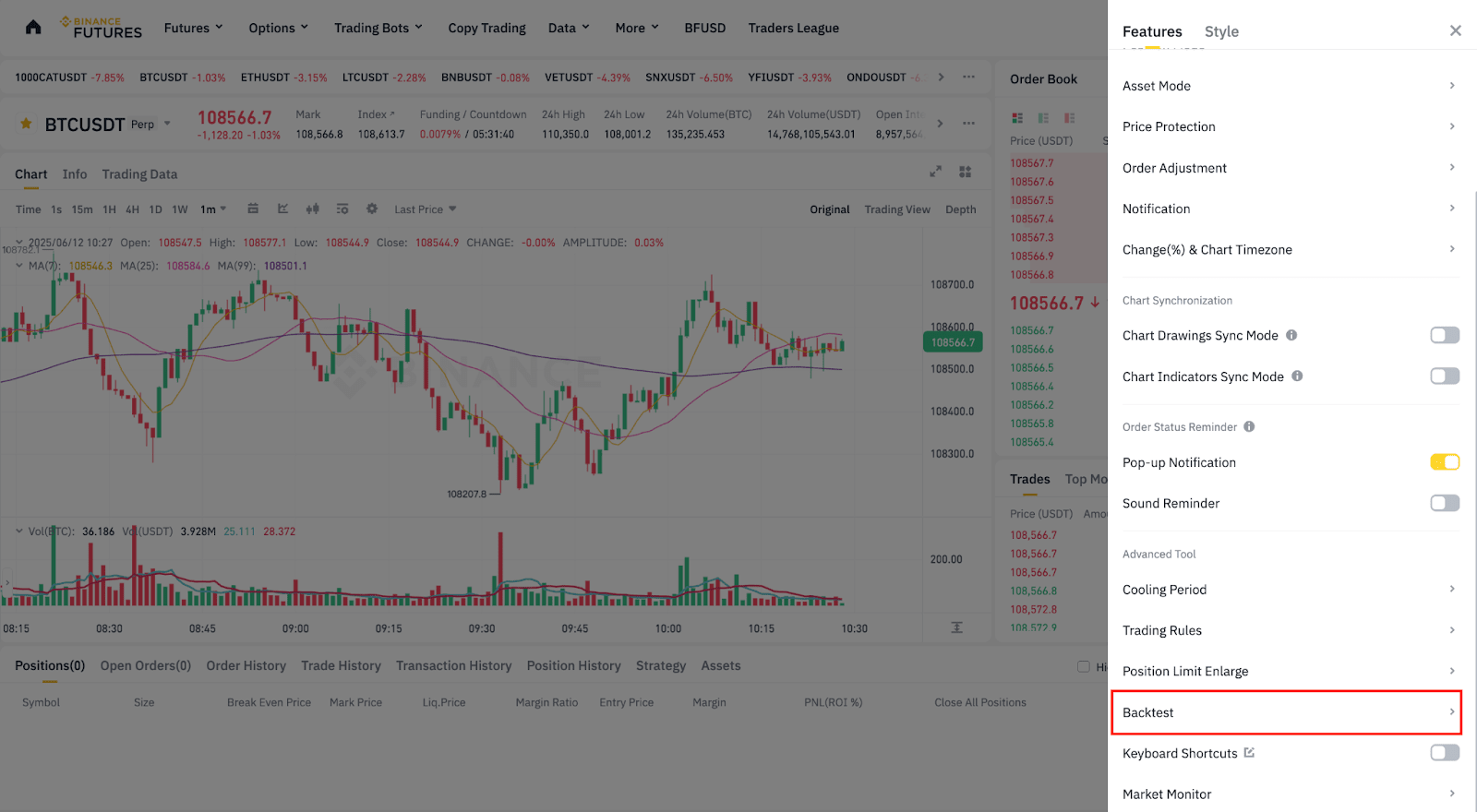
Let’s be honest. For years, backtesting was this intimidating, almost mythical tool reserved for hedge fund quants with PhDs and supercomputers. The rest of us? We’d maybe scribble some notes in a journal and hope for the best. But that landscape has shifted—dramatically.
Today, the modern retail trader has access to powerful, often free, backtesting platforms. The real challenge isn’t getting the software; it’s knowing how to use it effectively. How do you move from just looking at pretty equity curves to building a robust, quantitative backtesting process that actually tells you something useful? Well, that’s what we’re diving into.
Shifting Your Mindset: From “Did It Work?” to “Why Did It Work?”
First things first. The biggest mistake traders make is treating backtesting like a simple pass/fail exam. You run your strategy on historical data, see a juicy profit, and think, “Jackpot!” But that’s a trap—a seriously seductive one.
Quantitative backtesting isn’t about proving your strategy is perfect. It’s about stress-testing your logic. You’re not just seeking profits; you’re hunting for weaknesses, for the specific market conditions that will make your system fall apart. Think of it like a crash test for your trading idea. You want to see the dents and crumple zones before you drive it on the highway.
The Core Pillars of a Rigorous Backtest
Okay, so how do you build that crash test facility? It rests on a few non-negotiable pillars. Ignore these, and your results are basically fiction.
1. Data Quality & Survivorship Bias
You can’t bake a great cake with rotten eggs. If your data is bad, your test is garbage. The most common poison here? Survivorship bias. Using a list of today’s S&P 500 stocks to test a 20-year strategy is a classic error—it conveniently forgets all the companies that went bankrupt or were delisted. Your backtest would look amazing, because it only includes the winners. You need historical data that includes the losers, the ones that didn’t make it. That’s the real market.
2. Realistic Assumptions (The Devil’s in the Details)
This is where the rubber meets the road. You must model reality, not a fantasy. That means accounting for:
- Transaction Costs: Commissions, spreads, and slippage. A strategy that flips in and out of positions can be utterly demolished by these fees. They’re not just a footnote; they’re a main character in your story.
- Position Sizing: Did you assume you could always buy 100 shares, even at $5 per share in 1999? Your capital matters. Model it.
- Fill Logic: Did you get that limit order filled at the exact low tick of the bar? Probably not. Using “close-only” or more conservative fill rules can save you from a world of over-optimism.
Key Quantitative Metrics That Actually Matter
Forget just staring at total return. You need a dashboard of metrics to understand the engine’s performance—and its risk. Here are a few you should live by.
| Metric | What It Tells You | The “Good” Zone (It Varies!) |
| Sharpe Ratio | Risk-adjusted return. Are you getting paid for the volatility you endure? | Above 1 is decent, above 2 is very good for a retail strategy. |
| Maximum Drawdown (MDD) | The worst peak-to-trough loss. Can you stomach this psychologically? | Should be less than your risk tolerance (e.g., -20%). |
| Profit Factor | Gross Profit / Gross Loss. How much you win vs. how much you lose. | Above 1.5 is solid. Above 2 is strong. |
| Expectancy | The average $ you make per trade (after costs). | Consistently positive is the goal. |
But here’s a pro tip: don’t look at these in isolation. A high Sharpe with a massive, soul-crushing drawdown might mean the strategy is too brittle. You have to view the whole picture.
The Walk-Forward Analysis: Your Secret Weapon
This is, honestly, the single most important concept for moving from amateur to professional in your approach. Walk-forward analysis is the antidote to overfitting—which is just a fancy term for curve-fitting your strategy to past noise.
Here’s how it works, in simple terms:
- Optimize on a “in-sample” period (e.g., 3 years of data). Find your best parameters.
- Freeze those parameters. Don’t touch them.
- Test them on the following “out-of-sample” period (e.g., the next 6 months). This is data the strategy never saw during optimization.
- Then, you “walk forward.” Slide your window ahead, re-optimize on new data, test again on unseen data.
If your strategy holds up across multiple out-of-sample tests, you might have something robust. If it falls apart—and it often does—you’ve just saved yourself a fortune in live trading losses. It’s the difference between a strategy that works in a museum of past data and one that might survive in the wild.
Common Pitfalls & How to Sidestep Them
Even with the best tools, it’s easy to fool yourself. A few human tendencies to watch for:
Over-optimization: You tweak and tweak until the backtest is a perfect fit for history. But the future isn’t history. The strategy becomes so specific it’s useless going forward. The cure? Simpler rules. And that walk-forward method we just talked about.
Ignoring Market Regimes: A trend-following strategy will look like genius in 2020-2021. It’ll look like a disaster in a choppy, range-bound 2022. You need to segment your backtest by bull markets, bear markets, high volatility, low volatility. See where your edge actually exists—and, crucially, where it vanishes.
Psychological Readiness: This one’s subtle. Your backtest might show a 15% drawdown. On paper, that’s fine. But living through it, watching your capital erode day after day, is a different beast. The quantitative process must include a gut check: can you really execute this when it’s in the red?
Getting Started With Your Own Quantitative Backtesting
You don’t need to code a platform from scratch (though you can if you want!). Start with user-friendly options like TradingView’s Strategy Tester, or dedicated software like Soft4FX for Forex, or even Python libraries like Backtrader if you’re a bit more technical. The key is to start simple. Test a basic moving average crossover. Apply all these principles—realistic costs, walk-forward, look at the right metrics.
Treat your first few strategies as learning experiments, not lottery tickets. The goal is to learn the process, not to discover the Holy Grail on day one.
In the end, quantitative backtesting for the retail trader is about empowerment. It’s about replacing hope and hunches with evidence and edges. It turns trading from a game of chance into a field of probabilistic study. Sure, nothing guarantees future results—the market has a way of humbling everyone. But a rigorously backtested strategy gives you a map and a compass for the journey, not just a hope that you’re heading in the right direction. And that, in this business, is often the only real edge you can count on.